Transmission Tower Technician
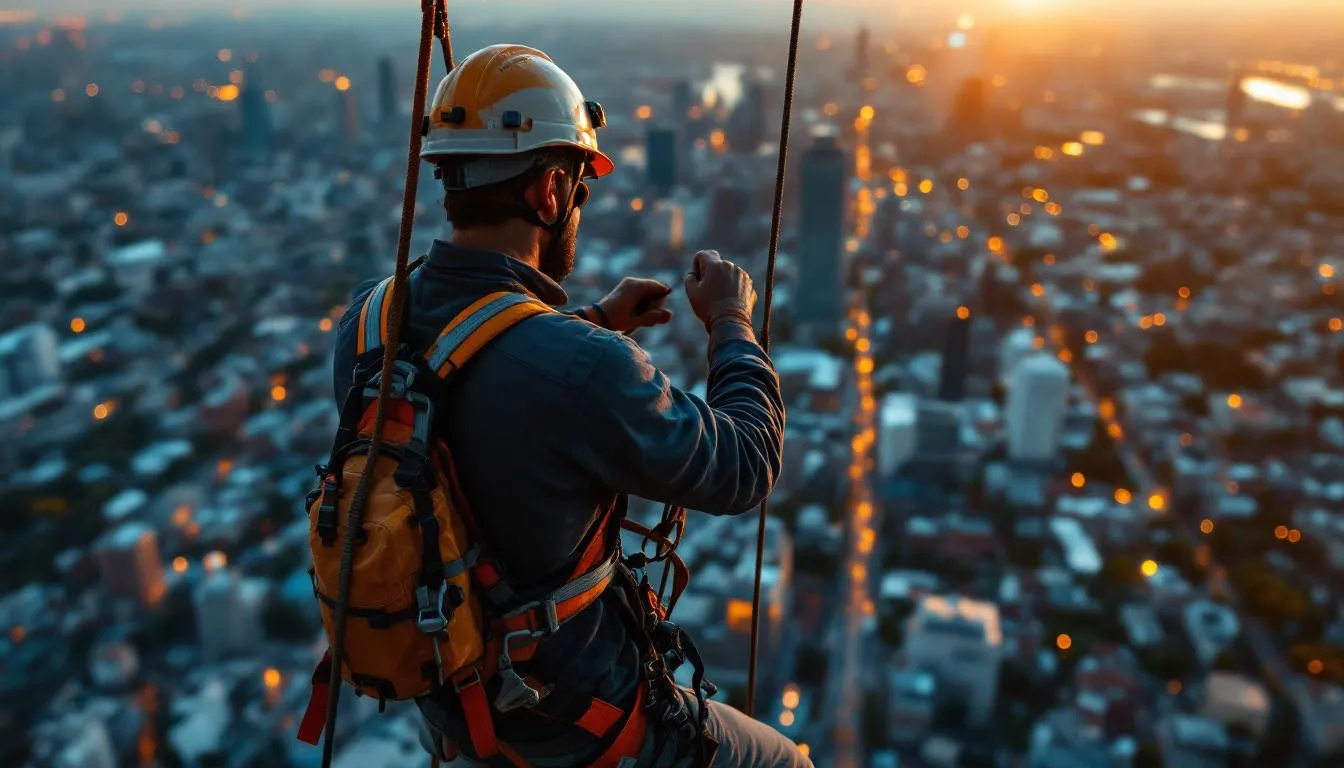
You work a thousand feet in the air, hanging from cables, bolting down equipment that beams signals across entire regions. Most people can't do this job. The ones who can make serious money and own a skill almost nobody else has. Your view from the top beats any office.
This is not a job where you clock in and ease into the day. You arrive at a tower site before dawn, get rigged up, and start climbing. The work happens in open air, often in bad weather, sometimes in extreme heat or cold. You are tethered to the tower the entire time you are climbing and working. Your crew is small, usually two to four people, and everyone depends on everyone else to stay alive. The pace is deliberate and careful. Rushing kills people in this job. You spend maybe half your time actually climbing and working at height, the rest prepping, inspecting equipment, and handling logistics on the ground.
Your day starts with a safety briefing and equipment check. You inspect your harness, carabiners, and climbing gear. You review the work order: maybe you are installing new antennas, replacing hardware that has corroded, running cable, or performing routine maintenance. You climb using climbing irons (spikes on your boots) or hand-over-hand using climbing aids, staying tied off the entire way. At height, you work methodically, bolting components, connecting cables, testing equipment. Wind is constant. Your hands get cold. You might work in sleet, sun, or fog. You have to stay focused for hours. Coming down is as careful as going up. On the ground, you document everything you did, help with equipment transport, and prepare for the next day or tower. Some days you drive three hours to a remote tower site. Some days you work at multiple locations.
You need genuine comfort with heights and the ability to stay calm when you are a thousand feet up. Fear never fully goes away, and that is fine. What matters is that you can manage it and stay focused on the task. You have to be detail-oriented and methodical. Rushing or getting sloppy gets people hurt. You work well as part of a small team where trust is not optional. You are physically strong and have good hand and grip strength. You do not mind being uncomfortable, bored sometimes, and cold or hot. You respect safety procedures even when they feel tedious. You are willing to travel and work irregular hours.
Most tower companies hire people without climbing experience and provide paid training. You typically start as a ground crew member or apprentice, learning safety protocols and assisting experienced technicians. The path goes: ground support (2-6 months) to climbing apprentice (6 months to 2 years, depending on the company) to certified technician. You will need to pass a climbing competency test and often get ANSI A10.48 certification (tower climbing standard). Some companies pay for this training. A few require you to have a commercial driver's license and a clear background. You should be in good physical shape before you start. Union shops (often IBEW or independents) tend to offer better pay and structure. Non-union shops offer faster entry but sometimes less consistent work. Start by contacting tower companies directly or checking job boards for 'tower apprentice' or 'climbing apprentice.' You can be earning within six months.
This job has a real fatality rate. Every year, tower technicians die from falls, equipment failure, and accidents. It is not common, but it happens. The people who do this job understand that risk and accept it as the trade-off for the pay and independence. You have to be mentally prepared for that reality. Beyond safety, the job is physically taxing on your shoulders, back, and grip strength. Tendinitis and chronic pain are common after ten plus years. You also spend a lot of time away from home, sometimes weeks at a time. If you have family obligations, this can be hard. The work is seasonal in some regions: winter tower work in the North can be brutal and sometimes shuts down. Summer heatwaves make climbing dangerous too. Some companies are better employers than others. A bad outfit can work you hard without proper support or training. Always ask other technicians about a company before you sign on.