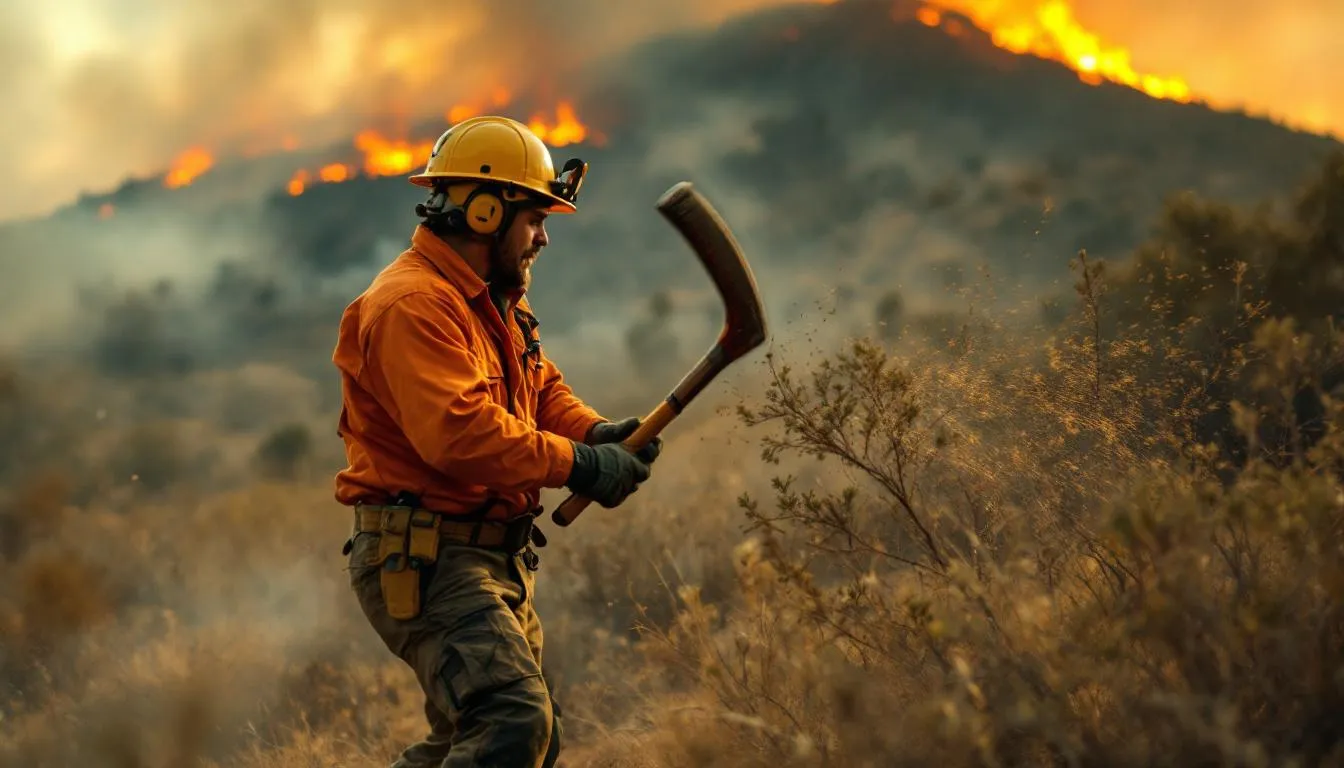
Hotshot Wildfire Crew Member
You are part of a 20-person hand crew that runs directly toward active wildfires while most people run the other way. The work is cutting fire lines with hand tools in extreme heat and smoke, often for 14-16 hour days. These crews have a reputation inside the outdoor world that few jobs can match.
You show up to a staging area before dawn and gear up for a day that could involve hiking 10+ miles uphill carrying 40+ pounds of tools and water through thick brush and rocky terrain. The crew works in coordinated lines, cutting vegetation and creating defensible space directly in front of an active fire. Temperatures on the line can exceed 120 degrees. Smoke is constant. You work alongside 19 other crew members, most of whom are doing this job because they want to be tested by something real. The pace is relentless but structured. There is no downtime during the shift. When the fire season ends, the work stops completely. The hierarchy is clear. Squad bosses lead squads of 5-6 people. Foremen manage the whole crew. New members start at the bottom and earn respect through effort and reliability. Mistakes can cost lives, so attention matters. The crew lives together in camps or fire stations during deployments, which can last weeks. Politics and ego do not survive in this environment.
Your primary task is cutting and clearing brush, small trees, and other vegetation to create a fire line, a defensible perimeter that slows or stops the fire's advance. You use hand tools like Pulaskis (axe-adze hybrid), shovels, and machetes. The cutting itself is rhythmic and explosive work. You swing for hours, matching the pace of the crew around you. When the crew moves, you move fast. Hikes to the fire line happen loaded with gear. Once on the line, you fall into your position and work until the line is complete or conditions change. You clear as the fire advances, sometimes working directly ahead of the flames. You watch for hazards like standing dead trees that could fall, unstable slopes, and changes in wind direction. Downtime involves tool maintenance, hydration, and brief meals. You help manage camp logistics when off-shift, which means cooking, cleaning, and equipment prep. As a new crew member, you handle more of the grunt work. As you gain experience, you lead sections of the line and mentor newer members. Physical awareness is constant. You monitor your own condition, your crew mates' condition, and the fire's behavior. Radios keep the crew connected to overhead command. Bad decisions happen fast in wildfires. Good crews stay alive because they communicate clearly and think ahead.
You need genuine physical toughness, not just fitness. This means the ability to push through pain, heat exhaustion, and fatigue without quitting. You also need to be coachable and ego-free. Hotshot crews are meritocratic. If you show up, work hard, and listen, you earn respect. If you make excuses or act like you know better, the crew will break you. The best hotshots are problem solvers who stay calm under pressure and think two steps ahead. They also genuinely like the people they work with because you spend weeks living in close quarters under brutal conditions. Loners do not make it here.
Most hotshot crews hire seasonally, typically starting in late spring. The hiring process is straightforward: you apply directly to a crew, interview with the crew boss or foreman, and if they like you, you are in. No college degree required. Many crews are part of the US Forest Service or work for federal contractors. Some are state or local crews. A few are private. Before your first season, you need basic fitness. Most crews will not take you on unless you can pass a pack test: hiking 3 miles in 45 minutes carrying a 45-pound pack uphill. This is the minimum fitness bar. You should exceed it. Spend the winter doing cardio and carrying weight in a backpack. Many hotshot applicants run, bike, and do manual labor jobs like landscaping or roofing to build the base. Your first season is probation. You start as a basic crew member and prove yourself through work ethic, reliability, and willingness to handle discomfort without complaining. Certification comes on the job. You learn to use hand tools safely and efficiently. You complete basic wildfire safety training before deployment. No special certification is required to start, though some crews prefer first aid or CPR cards. The most direct path: Start in March-April, apply to crews online or by walking into a local ranger district. Aim to get on a crew by May. Your first season will determine if you stay. If you do, by year two you have real experience and options. Many hotshots work 6-7 seasons, then move into other fire careers like structure protection or crew leadership. Some make this their career for 20+ years.
The physical toll is real and cumulative. After several seasons, many hotshots deal with chronic joint pain, particularly knees and lower back. The repetitive swinging, the uneven terrain, and carrying heavy packs for weeks at a time adds up. Your body recovers between seasons, but it is not free. Some hotshots blow out a knee or shoulder and their career is over. The work is seasonal and sometimes does not pay out. If fire season is slow, you work fewer hours and earn less. If you get injured early in the season, you lose income for months. There is no sick leave or unemployment backstop like other jobs. You also witness real danger. People die in wildfires. You may see someone get trapped or injured. The brotherhood is real, but so is the weight of knowing the work can be lethal. The job also breaks up your year. Relationships suffer when you are gone for 4-6 months. Starting families is harder when you earn seasonal income and leave for months. Many hotshots transition out after a few years specifically because the lifestyle does not fit their life anymore. That is fine and normal. Go in knowing it is not forever for most people.