Pyrotechnician (Film/TV)
When a car explodes on screen or a building facade erupts in flames, a pyrotechnician built every part of that effect from scratch and stood close enough to feel the heat. This is one of the few jobs where your coworkers trust you with their lives before the cameras roll. The work shows up in every action movie, concert, and live broadcast you have ever watched.
Most of your time on set is not the explosion. It is the setup before it. You arrive early, sometimes hours before crew call, to rig charges, test ignition systems, position gas lines, and walk the area with the director and stunt coordinator. You are the last person to approve a shot before it happens. That weight stays with you all day. The work environment shifts constantly. One week you are on a soundstage in Burbank wiring a kitchen fire gag. The next you are in a field in New Mexico rigging a mortar sequence for a period war film. Outdoor locations mean weather, wind, and ground conditions that change your calculations. Soundstages mean tight quarters, sprinkler systems, and studio safety officers watching every move you make. You work closely with the first AD, the stunt coordinator, the director of photography, and the special effects supervisor. On larger productions, you are part of a special effects team. On smaller jobs, you might be the whole department. The pace is stop-and-start, not constant action. Long stretches of precise preparation, then a few seconds of controlled chaos, then a full reset or debrief.
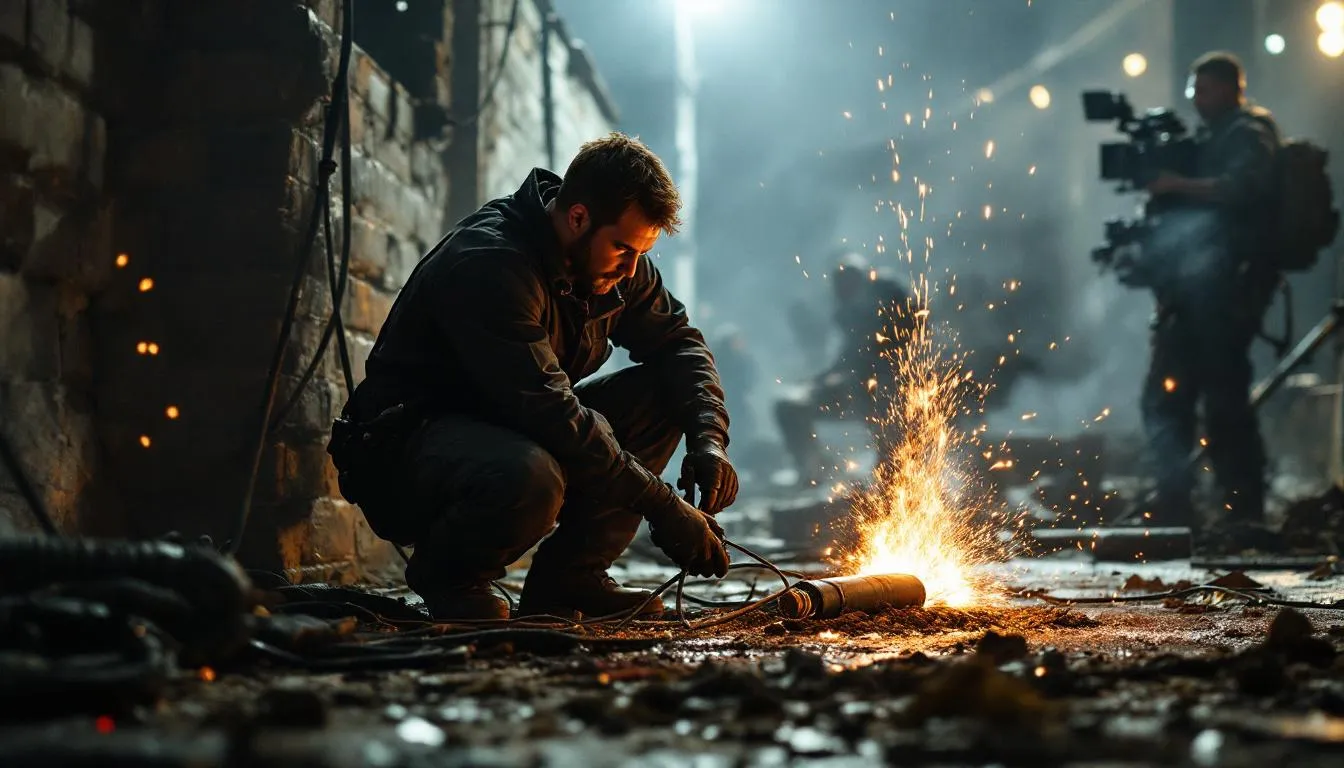
A typical day starts with reviewing the shot list for any effects work and meeting with the director or first AD to confirm what is needed. You assess the location, check for hazards, and calculate safe distances for cast, crew, and camera positions. Then you start rigging. That means placing mortars, running detonator wire, positioning gas pipes for fire bars or flame jets, and testing every connection before anyone else is near the set. For practical fire effects, you are controlling fuel type, flow rate, and timing to produce a repeatable flame on cue. For explosive effects, you are mixing and placing pyrotechnic compounds, setting charge size to match the visual without producing shrapnel or overpressure that could injure someone. Every charge is logged. Every component is tracked from the moment it leaves your secured magazine to the moment it is spent or returned. On the day of filming, you run a safety briefing with affected crew, establish a hot zone perimeter, and hold the firing device until the AD calls for the effect. You fire on command, observe the result, and either reset or clear the area depending on what comes next. After the shoot, you account for all materials, dispose of any residuals according to federal and state regulations, and document everything in your effects log. The paperwork is not optional. Regulators and studio safety officers audit it.
The people who last in this job are detail-obsessed in a way that goes beyond caution. One missed connection or miscalculated charge does not just ruin a shot, it ends careers and injures people. You also need to be calm under pressure in a way that is not performative, because the moment something does not go as planned, everyone on set is looking at you for the next decision. If you have a background in chemistry, electrical work, or the military's explosive ordnance fields, you already think in some of the right ways.
There is no degree for this. The path in is through hands-on experience, and that experience almost always starts by working under a licensed pyrotechnician as a crew member or assistant. You are not touching anything explosive at first. You are loading equipment, running cable, cleaning up, and watching how the licensed tech works. That period can last two to four years before you are ready to test for your own license. The key credential in the US is an ATF Low Explosives User Permit or a state-level pyrotechnics license, depending on where you work and what materials you are using. Many states also require a separate entertainment pyrotechnics license, and some require both. California, New York, and Georgia (major production hubs) each have their own licensing requirements. Look up your state's fire marshal office to find what applies to you. The International Alliance of Theatrical Stage Employees (IATSE) and its local chapters, particularly Local 44 in Los Angeles for special effects, are the union path for film and TV work. Getting into a union local gives you access to production work that non-union pyrotechs rarely see. Start by contacting a working special effects coordinator and asking if they need a non-union PA or effects assistant. Most people who make it in this field got their first job by showing up and being useful before they were qualified to do the actual work.
The licensing process is slow, expensive, and bureaucratic. You can spend three or four years working your way up before you are eligible to test, and then you are dealing with ATF paperwork, background checks, state fire marshal approvals, and storage facility requirements for your magazine. If you have any felony convictions, you are disqualified from handling explosives under federal law. That is a hard stop, not a soft guideline. The work is also more seasonal and project-based than people expect. Film production cycles mean there are stretches where your phone is not ringing. Big productions can keep you employed for months at a time, but indie films and smaller jobs pay less and may not have consistent effects work throughout the shoot. Building enough of a reputation to stay busy year-round takes most people the better part of a decade. In the meantime, many working pyrotechs supplement with live events, concerts, and sports productions, which have their own licensing requirements and their own culture.