Nuclear Plant Technician (Radiation Controlled Area)
You work inside one of the most heavily monitored and controlled environments on Earth. Every movement is tracked, every radiation dose is logged, and the stakes are real. This isn't theoretical safety training—it's the actual foundation of nuclear plant operations. Most people never see the inside of a reactor containment. You'd be one of the few.
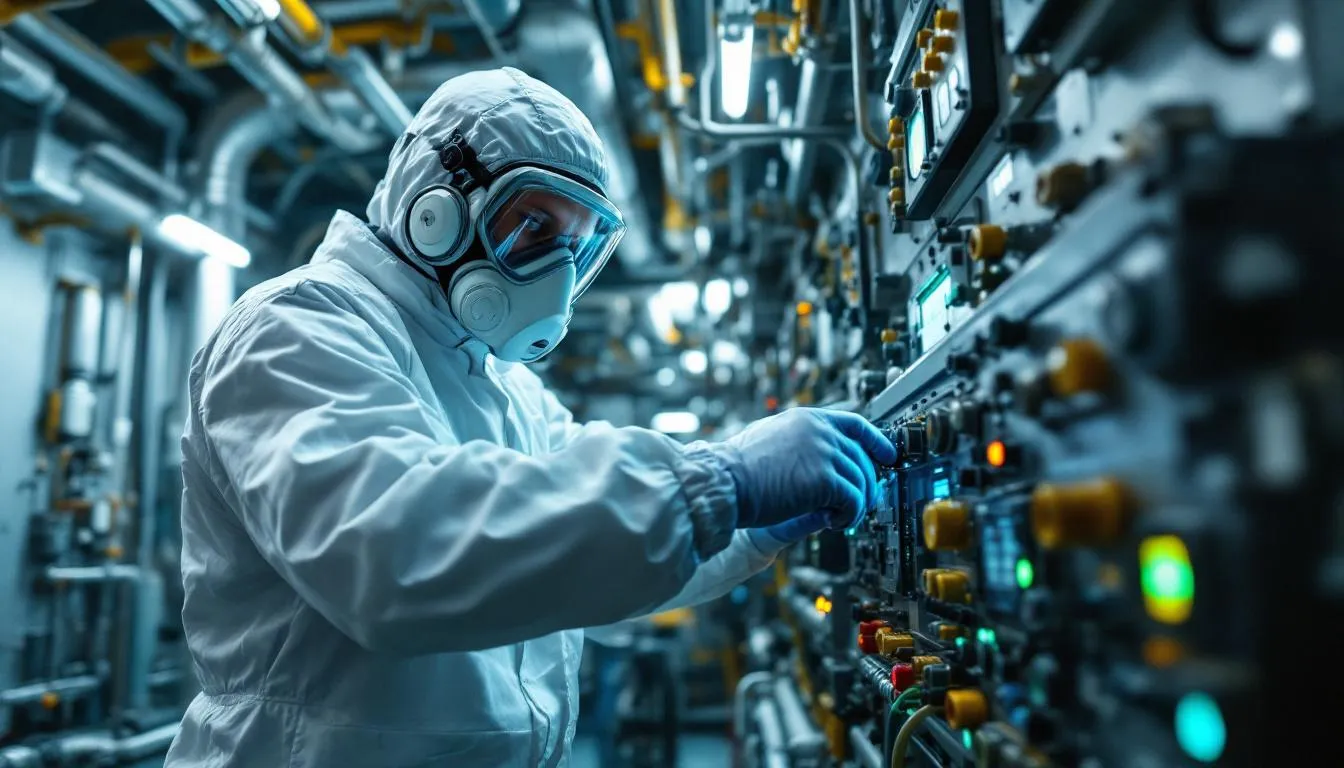
You work in full protective suits, sometimes multiple layers, moving through radiation-controlled zones of active nuclear facilities. The pace is methodical and deliberate—rushing is the fastest way to break protocol and get pulled from the job. You work alongside other technicians, health physics monitors, and engineers, all of whom are laser-focused on safety compliance. The environment is sterile, highly regulated, and sometimes cramped. Your day involves decontamination procedures, equipment checks, maintenance tasks timed to minimize radiation exposure, and constant communication with the control room. The work is physical but not fast. Precision matters more than speed.
Your typical day starts with a safety briefing and radiation exposure planning. You suit up in protective gear, sometimes rubber, sometimes specialized lead-lined equipment depending on the area and current radiation levels. You enter controlled zones and perform maintenance work: replacing components, repairing systems, inspecting equipment, and performing tests. The actual tasks vary widely depending on which systems need work, but they're always done under strict time limits calculated to keep your radiation dose below regulatory thresholds. You use specialized tools, some designed specifically for high-radiation environments where you cannot spend long periods. Throughout the day you move between the contamination zone, decontamination showers, and administrative areas. You document everything, cross-check procedures multiple times, and report any anomalies immediately. Some days involve routine tasks repeated in the same area. Other days you might be called to handle an urgent repair or system malfunction, which means faster work but still within protocol—never compromising safety for speed.
You need to be detail-oriented to the point where it feels obsessive. People who thrive here triple-check procedures, ask clarifying questions, and report concerns immediately rather than working around them. You must be comfortable with routine and repetition. You can't get bored doing the same safety check five times in a day. You also need to handle the psychological reality of working in a controlled hazard environment calmly. This job attracts people who respect systems and hierarchies, who want clear rules, and who find security in structure.
You need a high school diploma or equivalent. Most plants hire technicians through apprenticeships or on-the-job training programs. Some require vocational training in mechanical, electrical, or instrumentation systems first, which typically takes 1-2 years at a trade school or community college. Once hired, you enter a structured training program that can last 2-4 years before you're fully qualified to work independently in controlled areas. This training covers nuclear systems, radiation safety, decontamination procedures, and regulatory compliance. You must pass a security clearance and a medical screening. Radiation-area technicians are qualified through the utility's own NRC-approved training program, not individually licensed by the NRC the way reactor operators are. The utility trains and qualifies you in-house, through exams and on-the-job sign-offs, not before you start. Look for positions through nuclear plant job boards, unions like IBEW or the International Brotherhood of Boilermakers, or directly on plant websites. Plant operators like Duke Energy, Commonwealth Edison, and Southern Company regularly recruit technicians. The timeline from hire to independent qualification is long, but the pay starts during training.
The radiation exposure is real and regulated, but it's still a stressor. You're monitored constantly, and your cumulative dose is tracked against federal limits. Some years you might hit your annual exposure threshold and get benched from controlled-area work for months. The isolation can be grinding—nuclear plants are often in remote locations and the work culture is insular and risk-averse. Innovation is slow. Equipment is often old. You follow procedure exactly as written, not how you think might be faster or better. The job also requires long-term commitment. Plants invest heavily in training you, and they expect years of service. Leaving early can be difficult because your specialized training doesn't transfer cleanly to other industries. The overtime during outages is good money but can run 12-hour days for 2-3 months straight, which burns people out. Finally, the job market is shrinking as plants retire and new nuclear construction stalls, so long-term stability depends on which facilities operate in your region.