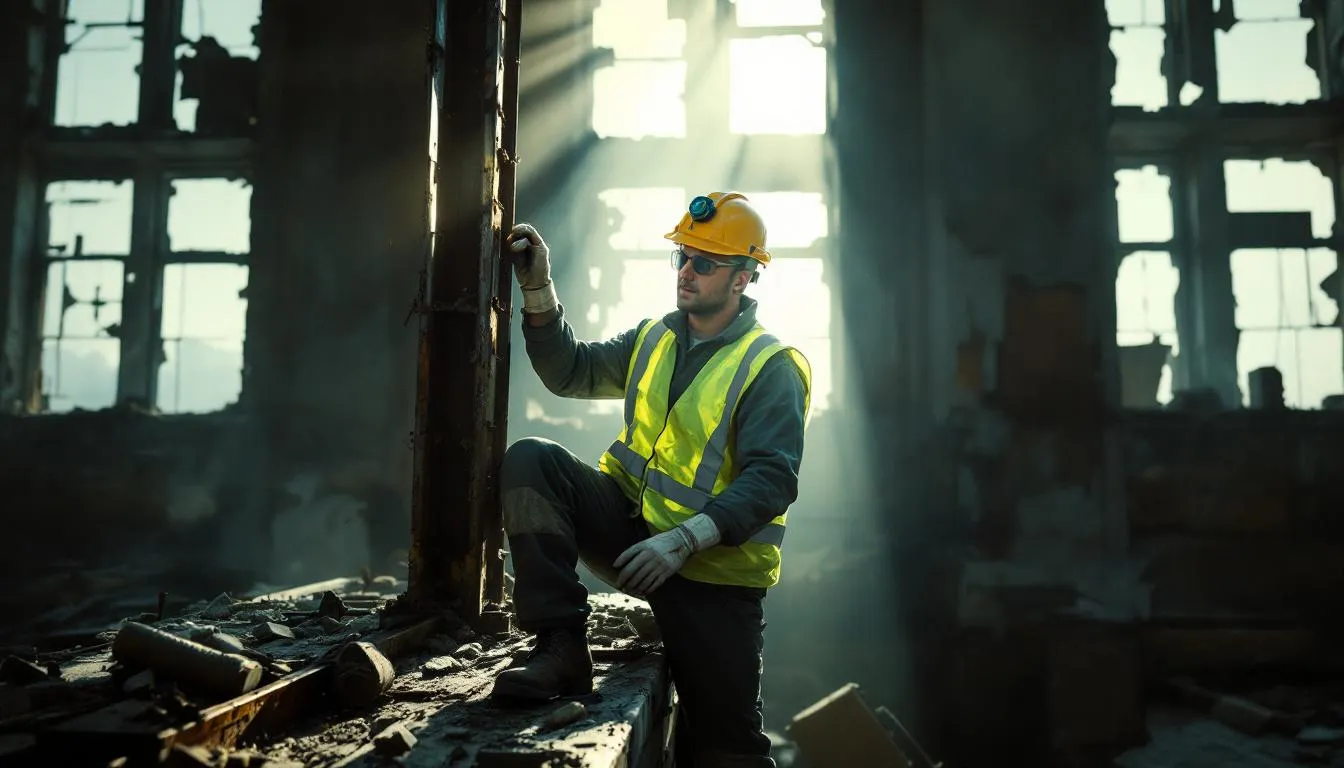
Controlled Demolition Specialist
You plan explosions that level city blocks on schedule and on target, often within feet of occupied structures. The work requires the same attention to detail as a surgeon, the nerve of a combat engineer, and a paycheck that reflects the risk. Most people will never do anything this consequential.
Controlled demolition is part engineering problem, part logistics operation, part pure nerve. You spend weeks or months on site before a single charge goes off. You are measuring load-bearing walls, calculating blast patterns, placing detonators, and coordinating with structural engineers, site supervisors, and city officials. The actual implosion might last seconds. Everything before it is about making sure those seconds go exactly as planned. You work for demolition contractors, often on high-profile projects in dense urban areas. Your crew is small and tight. You're on job sites that are organized chaos: heavy equipment moving, dust, noise, and constant pressure to stay on schedule. The work is seasonal in some regions, concentrated in others. The intensity is real. You are handling explosives, making calculations where mistakes have serious consequences, and working under scrutiny. Insurance companies, city inspectors, and project managers are all watching. The responsibility is part of what makes the pay good.
Your day starts with site assessment. You walk the building with structural engineers, architects, and the general contractor. You are photographing, measuring, identifying what stays and what goes. You need to understand the building's skeleton: where the load-bearing columns are, how it will fall when supports are removed, what structures nearby could be affected. Then you move to planning. You are creating demolition sequences, calculating the amount and placement of explosive charges, designing the blast pattern so the building falls in a controlled direction. This involves software, structural analysis, and sometimes old-school math. You are thinking in three dimensions about how concrete and steel will move. Once the plan is approved by engineers and permits are in place, you move to prep work. You are placing explosive charges in calculated positions, running detonation cord, setting up blast mats and barriers to contain debris, coordinating utility shutoffs so gas, electric, and water are offline before the bang. You inspect everything multiple times. On demolition day, you are the person managing the final countdown. You verify perimeter clearance, confirm all charges are armed and in sequence, communicate with the blast initiation team, and in some cases, you are the one who gives the signal. After the blast, you manage debris removal and site cleanup.
You need steady hands, a sharp eye for detail, and comfort with high-stakes decision-making. This job attracts people who like solving complex problems under pressure and don't need constant reassurance. You respect precision because mistakes in this work have real consequences. You should be someone who double-checks your own work without being asked and can stay calm when coordinating multiple people and pieces of equipment before a major event.
There is no degree path for this work. You start in construction or demolition, usually as a general laborer or equipment operator. Some companies hire directly into demolition roles if you have construction experience and a clean record. Certification is required. The International Society of Explosives Engineers (ISEE) offers the Certified Blasting Engineer (CBE) and Blaster certifications. Many states require you to be a licensed blaster. Some contractors require their own internal certifications on top of state licensing. The path typically involves on-the-job training under a licensed blaster (usually 2-4 years), passing a written exam on explosives handling and demolition theory, and getting fingerprinted and background checked. You'll need OSHA 30 certification (40 hours) and often HAZMAT handling certification. Some roles require a commercial driver's license. The whole process from laborer to certified blaster takes 2-4 years depending on how much hands-on experience you accumulate and how quickly you pass licensing exams. During that time you're learning under someone experienced and getting paid as you train.
This work carries real physical and legal risk. You are handling explosives and working around heavy equipment. An accident can be catastrophic. You need to accept that responsibility fully. There is no margin for carelessness. The pressure before a major demolition can be intense, and if something goes wrong, liability falls on you and the crew. The work is also project-based. You might have a three-month job, then a gap, then another job starts. In busy regions this is manageable. In slower markets you might face downtime between projects. Travel is often required, sometimes far from home for weeks. The job also demands ongoing certification maintenance and continuing education to stay current with regulations, which means your own time and sometimes your own money.