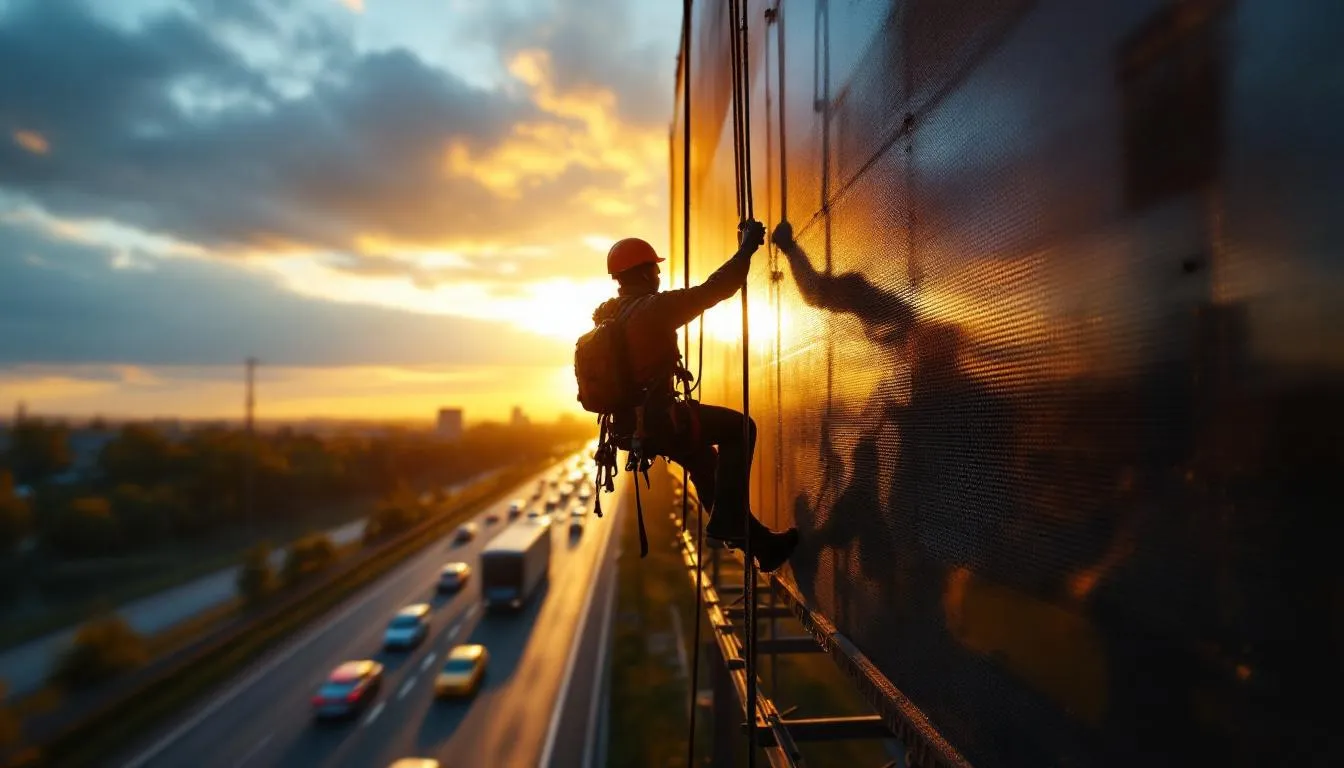
Billboard Climber
You spend your day 150 feet in the air on a steel frame, installing or replacing massive advertising panels that drivers see from the highway. Every billboard is different. Every day you get a view most people never see. The pay is solid, the work is physical, and you're done when the job is done.
Billboard climbing is construction work at serious elevation. You arrive at a site, assess the structure, plan your climb, and execute the install or repair. Some jobs take a full day. Others are quick fixes. You work in sun, rain, wind, and cold. Your crew is usually small: maybe two climbers and a ground team managing materials and traffic control. The work happens on active highways, so safety protocols are constant. You're always aware of traffic below, weather above, and the integrity of the structure you are trusting with your life.
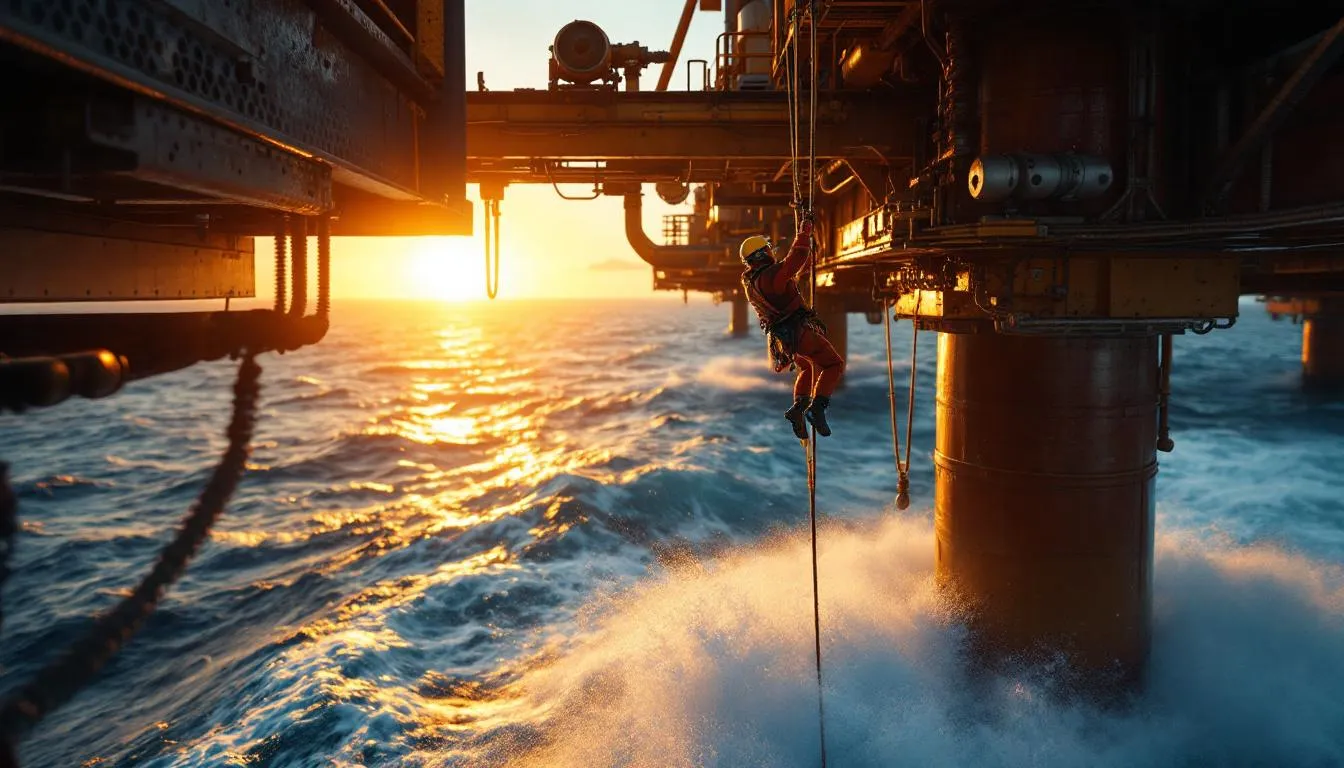
Your day starts with a site assessment. You inspect the billboard structure for damage, rust, or weakness. You check weather forecasts because wind above 20 mph can shut you down. You rig safety equipment: harness, rope, anchor points. Then you climb. Climbs vary from metal ladders bolted to the frame to free-climbing the lattice using your hands and feet. Once at the working height, you might be replacing vinyl panels, repainting sections, welding cracked frame elements, or installing new hardware. You work with tools at height: drills, impact drivers, paint rollers, cutting equipment. You communicate constantly with ground crew via radio. You manage your own safety continuously, checking your rope, your anchor points, your positioning. Weather can change fast. If wind picks up or a storm rolls in, you come down. Some jobs require night work to avoid traffic delays. You finish when the structure is safe and the work meets specification.
You need actual comfort at extreme heights, not just tolerance. Fear doesn't disappear; it gets managed. You also need relentless attention to detail on safety because a mistake at 150 feet is not a learning opportunity. Self-reliance matters: you are often making real-time decisions about weather, equipment, and technique without a supervisor watching. Climbers who last are practical problem-solvers who can rig solutions on the fly and stay calm when conditions turn bad.
Start by getting hired as ground crew for a billboard company. You do material runs, traffic control, and observe climbers. This takes 2-4 weeks. If you show aptitude and fearlessness at height, you move to climber training. Most companies run internal training programs that cover rope work, harness use, climbing technique, and fall protection. This takes 2-4 weeks of on-the-job instruction. You need to pass a physical and have a clean driving record. Some positions require OSHA 30 certification, which you can get in a week-long course (around $300-500). Look for companies like Lamar Advertising, Clear Channel, or regional billboard firms in your area. Many are union affiliated. Your first climbs are supervised. After 2-3 months of observation and assisted climbs, you're on crews independently. Most billboard climbers are hired directly by the advertising company or by subcontractors who handle maintenance and installation.
The physical toll is real. Your shoulders and elbows take constant load from climbing and tool work at height. Tendinitis is common. Your hands get torn up. The repetitive gripping and reaching creates long-term wear on your joints, especially if you are climbing 200+ days a year. Weather is not optional. You climb in rain, which makes handholds slick and rigging more difficult. You climb in heat, which is exhausting at that elevation with no shade. Wind can be terrifying. A 30 mph gust at 150 feet feels violent, and sometimes conditions force you down mid-job, which means coming back another day and starting over. The hours are irregular. You might work 60-hour weeks during install season, then face slow weeks with minimal hours in winter. There is also real danger. Falls happen. Rigging failures are rare but possible. Equipment age varies by company; some crews are working on gear that should have been retired. The job requires mental toughness. Most people cannot do this. If you have any vertigo, claustrophobia, or freeze at height, you will fail.