Tugboat Captain
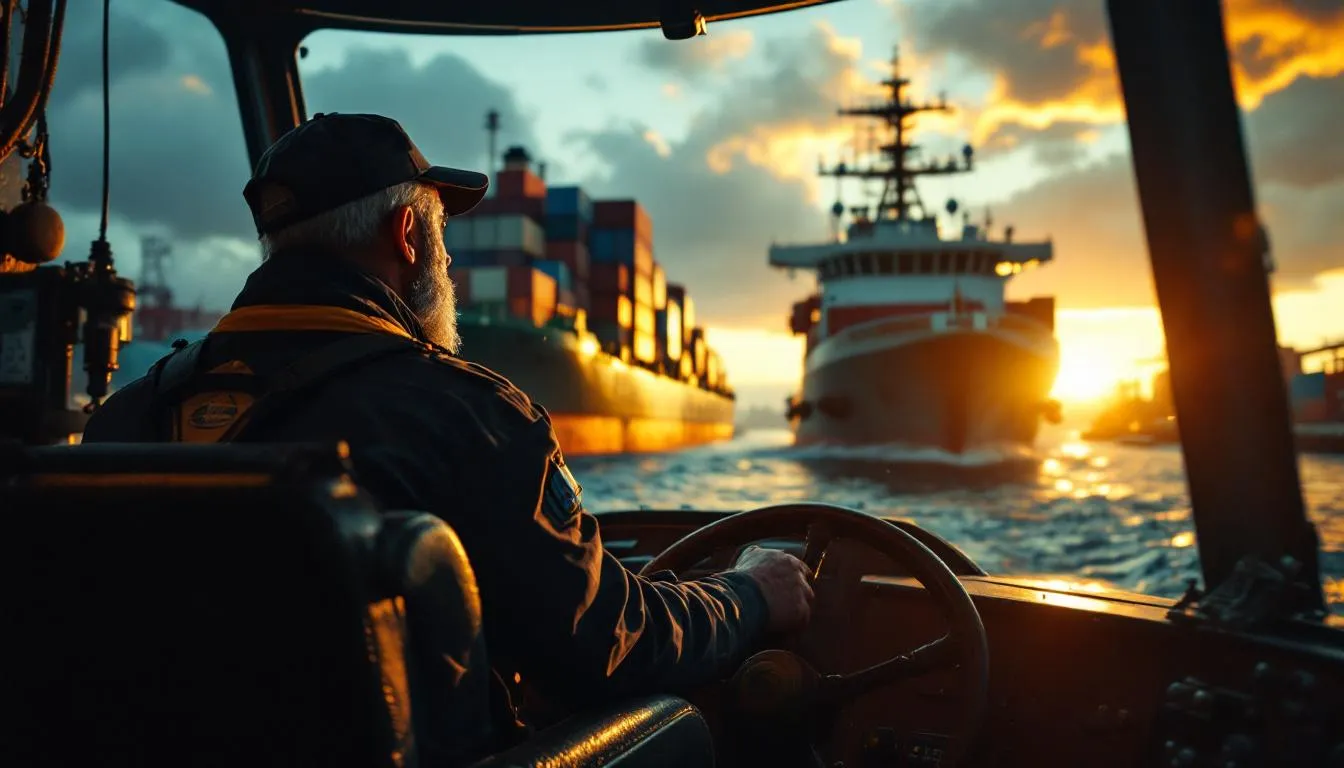
You're piloting a 4,000-horsepower machine into spaces so tight that a mistake costs millions. Tugboat captains handle the precision work that big ships cannot do alone, maneuvering container vessels and tankers through narrow channels, past breakwaters, and into berths where one wrong move is catastrophic. It's real-time problem-solving under pressure, and the skill ceiling is high.
You work on the water, typically in a port or harbor, moving between your tugboat and larger vessels you're hired to assist. Days start early. You might work 10-14 hours when there is a docking or undocking scheduled, then have blocks of downtime between jobs. Weather matters. You are reading wind, current, and tide constantly, talking to ship pilots and harbor masters over radio, and feeling how your boat responds through the wheel. The work is collaborative but your decisions carry weight. A miscalculation costs the shipping company real money and your reputation. The pace is not constant. Periods of waiting punctuate sudden bursts of intense focus. You live close to your port because you can be called in on short notice. Your crew is typically 3-5 people, and you know them well. Shifts can be irregular, sometimes overnight, sometimes split across a calendar day. The tugboat is your domain. You maintain it, know every system, and are responsible for keeping it running and safe.
Before each job you review the incoming vessel's size, draft, weight, and wind conditions. You plot the approach with the harbor pilot, who is directing the massive ship and relying on your boat's power and precision. Once underway, you maneuver your tugboat into position, attach towlines or push against the hull, and execute the docking. This requires constant small adjustments. Reading the way water moves, how wind pushes, how the ship's weight shifts as it turns. You communicate over radio with the pilot, other tugs, and harbor control. You watch your gauges, monitor engine performance, and stay alert to equipment issues. Between major jobs you perform maintenance on the tugboat. Engine checks, line inspection, hydraulic systems, navigation equipment. You keep logs, document fuel and material use, and report any damage or concerns. If weather deteriorates you may secure the boat and wait. If a ship needs emergency assistance or a tow breaks down, priorities shift. You might spend half a day troubleshooting a line attachment or dealing with unexpected sea conditions. Most days are routine. Some days test your problem-solving.
You need absolute confidence in your spatial judgment and an ability to stay calm when a $200 million ship is depending on your next move. Tugboat captains are detail-oriented and methodical, doing the same pre-job checks even when tired. You respect the water and equipment, take responsibility seriously, and communicate clearly under stress. This job suits people who think in three dimensions, enjoy solving physical problems, and want a career where skill and experience are directly tied to your value.
You start as a deckhand on a tugboat or in the maritime industry. Most captains begin at 18-22, working on commercial fishing boats, ferries, or cargo vessels. You learn the water, marine mechanics, and how to work around machinery and hazardous conditions. After 2-3 years as deckhand you can move to pilot positions on tugboats, running routes and learning navigation under supervision of experienced captains. The critical step is getting your merchant mariner credentials. You need a Mate license (or Pilot license specific to your harbor) issued by the Coast Guard, which requires documented sea time (usually 360-730 days depending on your role), passing an exam, and sometimes specific training courses. Many maritime unions offer apprenticeships and training programs that accelerate this path. The International Organization of Masters, Mates & Pilots (MM&P) and the Seafarers' Union can point you to apprenticeships. From deckhand to Captain typically takes 5-8 years of continuous maritime work.
The maritime industry runs on tight schedules that don't accommodate your personal life. You will miss holidays, anniversaries, and family events when ships need docking. Time away from home is standard, especially early in your career. The work is physically demanding and the environment is harsh. Winter docking in northern ports is brutal. Equipment fails. Lines snap under tension. Crew injuries happen. The cognitive load is real: one mistake costs millions, and you carry that weight. Union work is stable but non-union opportunities pay less and offer fewer protections. Your career depends on your reputation in what is a close-knit industry. Maritime regulations are complex and constantly changing, and you need to stay current. The pool of captains is relatively small and competitive. Once you reach captain, advancement is limited unless you move into management or larger vessels, which requires additional credentials.