Cheesemaker (Cave-Aged Specialty)
Some cheeses take six months to a year before anyone knows if the batch worked. You are managing living cultures, controlled rot, and microbial environments that have been used for centuries. The wheels you turn and brush today will be on restaurant menus next year.
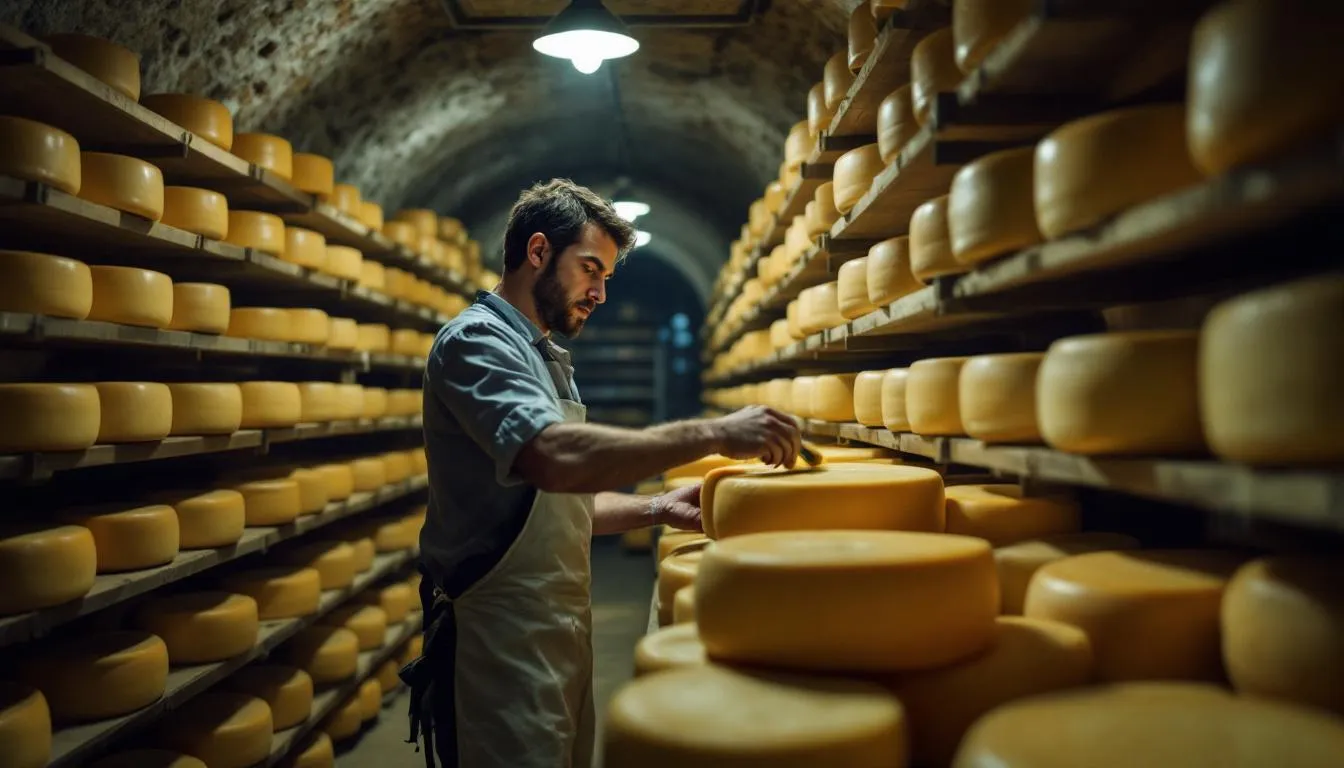
Most of your day is physical and repetitive. You are lifting 20-40 pound wheels, salting, turning, brushing, and monitoring humidity and temperature in aging caves or cellars that hover around 50-55 degrees Fahrenheit. Small creameries and specialty producers run lean, which means you are doing everything from milk intake to cave maintenance. The work is hands-on from the moment you clock in. You work closely with a small crew, sometimes just two or three people. In a larger production facility, there is more division of labor, but in artisan operations, one person often handles multiple stages. The pace is steady rather than frantic, but the margin for error is low. A contaminated batch, a broken temperature log, or skipped turning schedule can wipe out weeks of work and thousands of dollars in product. This is not a warm kitchen job. You spend real time in cold, damp cave or cellar environments. Your hands are in salt brine, your forearms are covered in aging rind cultures, and the smell becomes part of your workday. If none of that bothers you, the sensory side of this work is genuinely interesting, and the skill you build is transferable to very few people.
On the production side, you start with milk. You heat it, add starter cultures and rennet, monitor coagulation, cut the curd, and handle the pressing and molding process. The exact steps vary by cheese type, but precision matters at every stage. Getting the acidity wrong early in the process ruins the finished product regardless of how well you age it. Once wheels move into the aging cave or cellar, your job shifts to maintenance. You turn wheels on a set schedule, sometimes daily in early aging stages. You apply and monitor rinds using salt, brine, specific mold cultures, or cloths depending on the style. Cave conditions require constant attention. Humidity that drifts too high grows the wrong molds. Temperature swings affect texture and flavor development. You are reading the environment and responding to it every day. You also do sensory evaluation. That means tasting, smelling, and physically examining wheels to catch problems early or confirm that aging is progressing correctly. You keep detailed production logs because traceability is required by food safety regulations and because you need to know what worked when you hit a good batch. Sanitation is a constant. Dairy environments require strict cleaning protocols, and that work does not stop just because the production day ends.
You need to be someone who can stay focused on repetitive tasks without cutting corners, because skipping a turning or letting a temperature log slide creates problems you will not see for months. People who do well here tend to have a mechanical curiosity about how things work at a small scale combined with enough patience to let a process run its course. If you liked biology or chemistry in school but not the classroom, this work will make sense to you quickly.
No degree required. Most people break in through one of three paths: working at a small creamery as a general production worker, completing a cheesemaking certificate program, or doing a formal apprenticeship through a working dairy or specialty producer. The Vermont Institute for Artisan Cheese and programs through the American Cheese Society offer coursework that gets you foundational knowledge faster than learning purely on the job. The ACS Certified Cheese Professional exam is the main credential the industry recognizes, though you typically need 4,000 hours of documented experience before you can sit for it. It is not an entry requirement, but having it later in your career opens doors to higher-level production and affineur roles. For a first job, look at small specialty creameries, cave-aged producers, or farmstead operations that post openings for production assistants or cave workers. Expect to start around $16-20/hr doing basic cave maintenance and sanitation before you are trusted with production decisions. Reaching full cheesemaker pay typically takes two to four years of consistent hands-on work. The American Cheese Society job board and regional dairy extension programs are practical places to start looking.
The pay ceiling at small artisan operations is real and it comes fast. A lot of craft creameries are family-owned businesses running on thin margins. Head cheesemaker at a respected small producer might top out at $55,000, and that role may not open for years because the person in it is not leaving. If you want to grow financially, you either move to a larger specialty producer, start your own operation, or transition into consulting, all of which require time and money you may not have early on. The cold is cumulative. Spending hours each day in a 50-degree cave with damp air is manageable in your twenties, but it takes a physical toll over time. Hand and joint issues are common among long-term cheesemakers. The work is also seasonal at many creameries tied to local milk supply, which can mean reduced hours or layoffs in slower production months. Before you commit to this path, find out whether the operation you are looking at runs year-round or not.