Clock and Watch Restorer
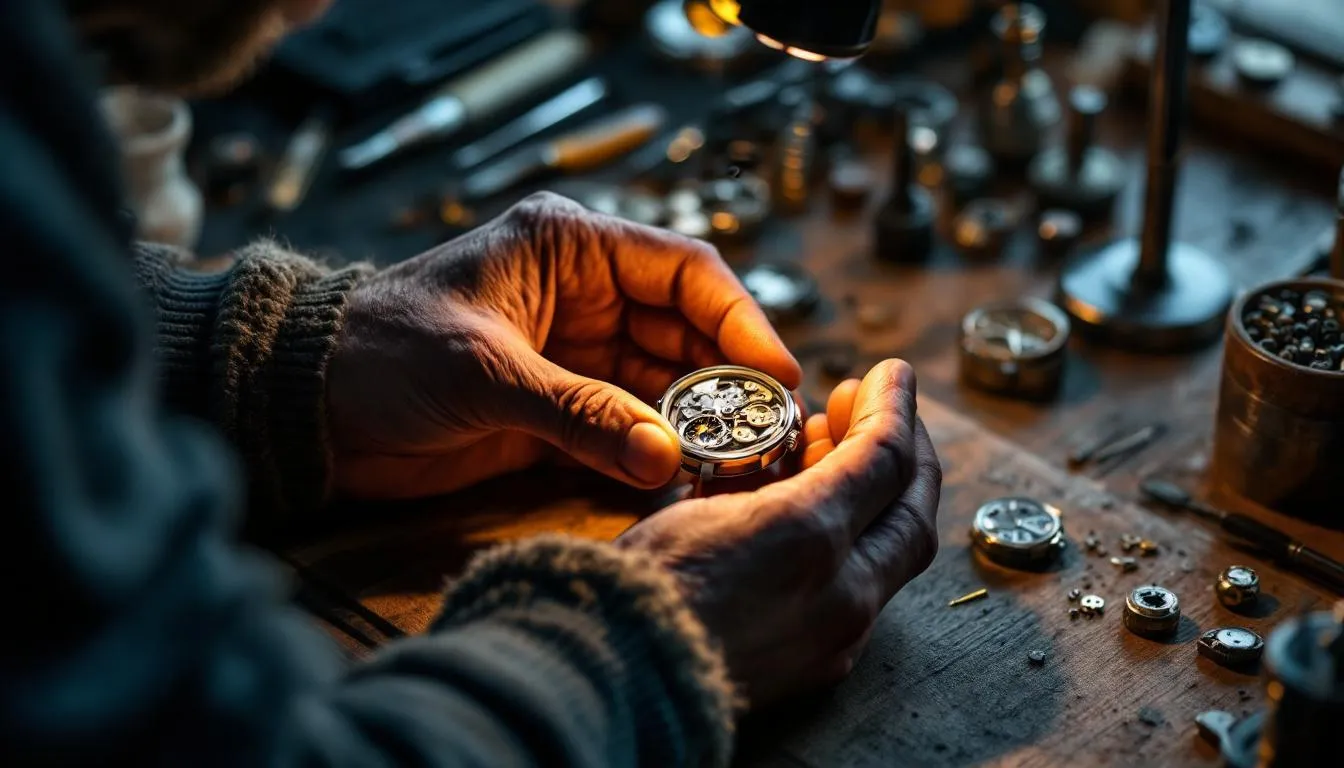
You'll spend your day holding 200-year-old mechanisms in your hands, figuring out why they stopped, and making them tick again. The work is so precise that most of it happens under a microscope. It's the kind of craft where you can actually see the results of your focus in real time.
Clock and watch restoration is methodical, quiet work. You'll spend most of your day bent over a workbench, often with a magnifying glass or microscope, handling parts smaller than a grain of rice. The shop is usually calm, sometimes too quiet. You work alone or alongside one or two other restorers, and interaction with clients happens mainly at the front end when they drop off a piece and at the end when you explain what you found and what it cost to fix. The pace is slow by design. You cannot rush precision work. A single watch movement can take anywhere from a few hours to several weeks depending on condition and complexity. Some days you'll be stuck on one problem for hours. Other days you'll knock out three or four simpler repairs. The work is indoors, temperature-controlled, and the lighting matters enough that you'll notice bad shop setup immediately.
Your day starts by examining whatever pieces came in, documenting their condition with notes and sometimes photos. Then you begin disassembly, which means taking apart movements with tools that look more like jewelry instruments than anything mechanical. You'll use tweezers, specialized screwdrivers, and hand-operated lathes that are sometimes decades old themselves. Once disassembled, each part gets cleaned in specific solvents to remove old lubricants and debris. Hairspring cleaning alone can take an hour per watch. Then comes diagnosis: you test escapements, check for wear, measure pivots, and figure out which parts need repair versus replacement. Some parts you can source from parts dealers. Others you fabricate by hand, turning pivot steel or reshaping a bent hairspring on a tiny lathe. Reassembly is where precision becomes unforgiving. A hairspring one-tenth of a millimeter out of position will make the watch lose ten minutes a day. You'll regulate the balance wheel, adjust the escapement, and test the rate multiple times. Final steps include lubrication with the right oil at the right spots, casing it back up, and a full functional test. Documentation goes back to the client with the piece.
You need genuine patience, not just the ability to sit still. People who do well here are genuinely curious about how things work and willing to spend an hour troubleshooting a single part. You must have steady hands and good eyesight, or at least willingness to wear strong magnification. The best restorers are meticulous without being neurotic about it, and they see mistakes as information, not failures. You should be comfortable working alone for long stretches and okay with the reality that some days you'll make very slow visible progress.
There is no formal degree path, but there are legitimate training routes. Lititz Watch Technicum in Pennsylvania and other AWCI-affiliated training programs run courses ranging from six months to two years, costing $2,000 to $15,000. These programs teach theory, tool use, and hands-on repair under expert supervision. Alternatively, you can apprentice directly with an established restorer, though this is becoming rarer. Some restorers start by working in jewelry repair or precision manufacturing, then move into watches. The fastest entry is usually a formal program followed by employment at a shop or independent practice. You need steady hands, serious patience, and the ability to problem-solve with tools. Most people reach competency for basic repairs within a year of training, but building the judgment to handle rare or extremely damaged pieces takes three to five years of regular practice.
The eyestrain is real and cumulative. You'll be looking through magnification eight to ten hours a day. Many restorers eventually need stronger glasses or specialized lenses just to keep working. Your back and shoulders will remind you that you spend most of your day bent forward over a bench. Good posture helps, but it is relentless. The work is also isolating in ways that matter. You're alone most of the day. If you thrive on social interaction or variety in environment, this will wear on you. The market for repair is also shrinking because watches are cheaper to replace than restore, and fewer people value restoration. Building a sustainable income often means specializing in high-end vintage or antique pieces, which requires building expertise and reputation over years. Some restorers supplement with watch sales or jewelry work. The industry also skews older; finding shops that are actively hiring is harder than it should be.